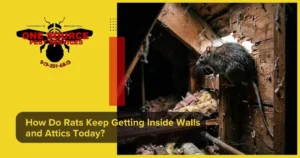
Hearing scratching sounds behind your walls or above your ceiling can be frustrating, especially when the noise returns after you thought the problem was resolved. Rats can enter homes through small openings around rooflines, vents, pipes, foundations, and damaged exterior materials. Once inside, wall cavities and attics provide sheltered spaces where rodents can move, hide, and build nests. Homeowners may seal one visible gap or remove a rat, only to discover that another entry point remains open. Understanding how Rats get inside, what attracts them, and why infestations return is the first step toward protecting your property. One Source Pest Services provides rodent removal and prevention services to help homeowners address existing rodent activity and reduce the risk of future problems.
How Do Rats Get Inside Walls and Attics?
Rats are skilled at exploiting openings around buildings. They can climb many rough surfaces, follow utility lines, and travel along roof edges to reach vulnerable parts of a home. They do not need a large, obvious hole to gain access.
Small gaps around pipes, cables, vents, and exterior joints can become entry routes. Damaged roof materials, loose soffits, gaps around attic vents, and deteriorating foundation areas can also provide access. Mice can fit through openings as small as a quarter inch, while rats generally need larger gaps depending on their size and species. This is why even minor exterior damage deserves attention.
After entering a building, rodents may travel through wall cavities, ceiling voids, crawl spaces, and attic areas. These spaces offer cover from people and pets, making rodent activity difficult to notice until scratching, gnawing, droppings, or odors appear.

Why Rats Choose Walls and Attics
Rats do not enter a home only because they find a hole. They also look for places that offer shelter, nesting opportunities, and access to food and water.
Warm, Protected Nesting Areas
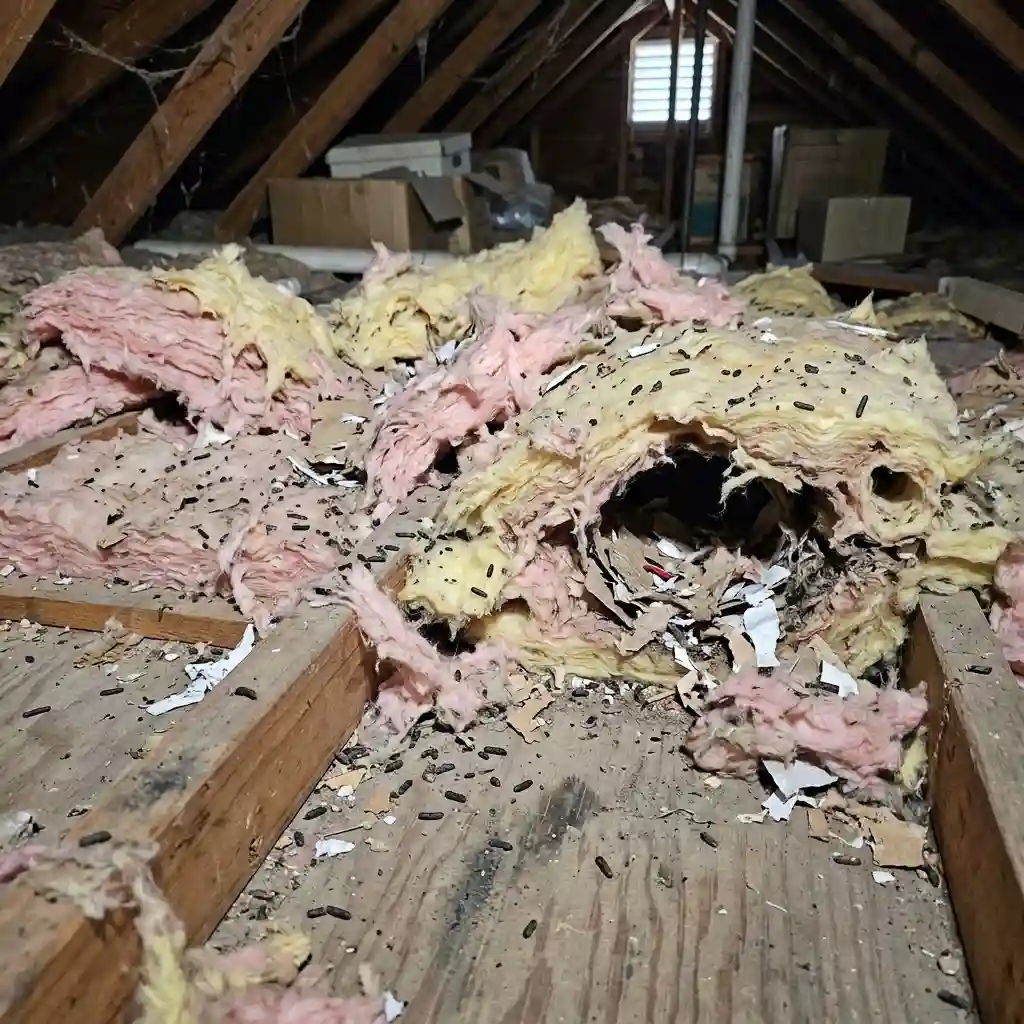
Wall cavities and attics are often quiet and sheltered from outdoor conditions. Insulation, cardboard, paper, and other stored materials can provide nesting material. Once rodents establish a nest, they may continue using the area if food, shelter, and access remain available.
Nearby Food and Water
Pet food, unsecured garbage, spilled food, birdseed, and improperly stored pantry items can attract rodents to a property. Leaking pipes or other accessible water sources may also contribute to the problem. Even when food is not stored in the attic, rodents can travel between sheltered nesting areas and places where food is available.
Easy Access From Outside
Overhanging branches, climbing plants, nearby fences, and utility lines may help rodents reach parts of a structure that are otherwise difficult to access. Roofline gaps and poorly screened vents can then provide a route indoors.
Removing attractive food sources and reducing access to shelter can make a property less inviting, but these steps work best when combined with a thorough inspection and appropriate exclusion measures.
Why Do Rats Keep Coming Back After Removal?
One of the most common reasons a rat problem returns is that removing the animals does not automatically close the openings they used to enter.
For example, a homeowner might hear noises in the attic, set traps, and catch a rat. If a gap near the eaves or a damaged vent remains open, another rodent may use the same route later. Similarly, sealing one hole does little to help if several other gaps exist around plumbing lines, the foundation, or the roof.
A second issue is incomplete removal. Rodents may remain hidden in inaccessible spaces even when activity becomes less noticeable. Droppings, gnaw marks, nesting material, and repeated noises can indicate that further inspection is needed.
A third issue is the environment around the home. Uncovered trash, pet food left outside overnight, dense vegetation, and piles of debris can continue attracting rodents toward the building.
The most effective response combines removal, inspection, entry-point sealing, and practical changes to the surrounding environment. The exact plan depends on the extent of activity and the structure of the property.
Signs That Rats May Be Living Behind Your Walls
Rats can remain hidden for long periods, so homeowners should pay attention to indirect signs as well as visible sightings.
Common warning signs include:
- Scratching or scurrying sounds: Noises in walls or ceilings, particularly when the house is quiet, may indicate rodent movement.
- Droppings: Rodent droppings may appear in cupboards, along wall edges, in storage areas, or near suspected entry routes.
- Gnaw marks: Rats chew materials and may leave marks on wood, plastic, packaging, or other surfaces.
- Damaged insulation: Disturbed insulation or shredded nesting material in an attic may suggest rodent activity.
- Unusual odors: Persistent stale or musty smells in concealed areas can sometimes indicate rodents or contaminated nesting sites.
- Repeated sightings: Seeing rats near the roofline, garage, or foundation may point to a possible access route.
One sign alone does not always confirm an active infestation. However, repeated noises or fresh droppings should prompt further investigation before the problem spreads.
How to Reduce Rat Entry Into Your Home
Preventing rats requires attention to both the building and the conditions around it. A careful inspection can reveal gaps that may otherwise go unnoticed.
Inspect Rooflines, Vents, and Exterior Openings
Check the roof edges, eaves, soffits, attic vents, and areas where cables or pipes enter the building. Look for damaged screens, loose materials, and gaps around exterior joints. Roof and attic inspections should be handled safely, particularly where ladders or damaged structures are involved.
Seal Gaps With Appropriate Materials
Use rodent-resistant materials suited to the size and location of each opening. Small gaps may require suitable sealants combined with metal mesh, while larger openings may need durable repairs using metal, hardware cloth, or other appropriate construction materials. Expanding foam alone may not stop rodents from chewing through an opening.
Be careful around electrical wiring, gas lines, and plumbing. Repairs near these systems should be assessed by a qualified professional to avoid creating additional hazards.
Remove Food Sources and Outdoor Clutter
Store food and animal feed in sturdy containers with tight-fitting lids. Secure rubbish, clean up food spills, and avoid leaving pet food outdoors overnight. Keep vegetation and debris managed around the house, and store firewood away from exterior walls where practical.
These actions reduce the conditions that attract rodents, but they will not resolve an established infestation by themselves.
Why Professional Rodent Removal Can Help
Finding every entry point is often more difficult than identifying the first sign of a rat. Openings may be hidden behind stored belongings, roof materials, insulation, or utility connections. Rodents may also travel through several connected areas of a building, making it difficult to determine where they are nesting.
One Source Pest Services offers rodent removal and prevention for residential and commercial properties in its Southern California service area. The company emphasizes property assessments, customized treatment plans, and prevention rather than focusing only on eliminating visible pests. Its broader services also include attic cleanouts and insulation removal and replacement when needed.
A professional assessment can help determine where rodents are active, which openings may be allowing access, and what removal and exclusion measures are appropriate. Depending on the situation, the plan may involve trapping, sealing entry points, addressing attractants, or cleaning contaminated attic areas.
Rodent droppings and nesting materials should be handled carefully because they can carry harmful germs. Avoid sweeping or vacuuming dry droppings, which can release contaminated particles into the air. Follow public health guidance for safe cleanup or arrange professional assistance when contamination is extensive or difficult to access.
Stop the Cycle of Rats Returning to Walls and Attics
When rats repeatedly appear in walls or attics, the underlying access problem may still be present. Trapping or removing visible rodents is only part of the solution. Lasting prevention requires identifying entry points, closing them with appropriate materials, reducing food and shelter sources, and checking for signs of continued activity.
One Source Pest Services helps property owners address rodent problems with removal and prevention services tailored to the property. If you are hearing unexplained scratching, finding droppings, or noticing damage around your attic, a professional inspection can help identify the next steps.
Call (949) 201-6845 or contact One Source Pest Services to discuss rodent removal for your property. Addressing both the rodents and the openings they use can help make your home less accessible to unwanted pests.